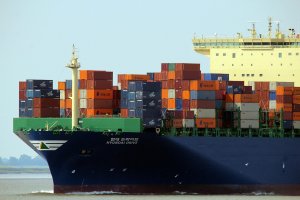
U.S. container imports declined 7.8% year-over-year in November 2025, with imports from China falling nearly 20%. While the headline numbers may appear modest at first glance, the underlying trend points to a meaningful shift in global trade patterns and shipping demand as the industry moves beyond the post-pandemic surge.
According to Descartes Systems Group, U.S. ports handled approximately 2.18 million TEUs of imported containers in November. Despite the year-over-year decline, this still ranks as the fourth-strongest November on record, trailing only the exceptional volume years of 2020, 2021, and 2024. For the first eleven months of 2025, total import volumes remain marginally above 2024 levels, but the pace of growth has slowed dramatically from the nearly 10% gains seen earlier in the year.
The most notable development in November was the sharp reduction in cargo originating from China. Imports from China fell roughly 19.7% compared to November 2024, reflecting a combination of inventory normalization, ongoing supply chain diversification, and continued uncertainty surrounding U.S. trade and tariff policy. As a result, the trans-Pacific trade lane—long considered the backbone of U.S. containerized imports—is becoming more volatile and less predictable.
This slowdown is not an isolated data point. Import volumes began softening in mid-2025 as front-loaded cargo ahead of potential tariff changes worked through the system. September and October also recorded year-over-year declines, particularly on China-origin shipments, reinforcing the view that the era of consistently rising import volumes has ended.
For the maritime sector, these trends carry direct implications. Softer container volumes typically translate into greater capacity discipline by carriers, increased blank sailings, and heightened competition across trade lanes. From a bunker market perspective, fluctuating vessel utilization and shifting trade patterns can lead to uneven fuel demand across regions, ports, and vessel classes—especially on Asia–U.S. routes.
Looking ahead to 2026, trade policy has become a central variable in forecasting shipping and fuel demand. Tariff uncertainty, legal challenges, and potential policy changes are influencing ordering behavior and voyage planning. Rather than a collapse in demand, the market appears to be entering a phase defined by caution, flexibility, and heightened sensitivity to geopolitical developments.
While November’s decline does not signal a freight recession, it does confirm a structural transition away from the extraordinary conditions of the post-pandemic boom. For vessel operators, charterers, and fuel suppliers alike, adapting to a more variable and policy-driven trade environment will be critical as global shipping recalibrates for the next cycle.