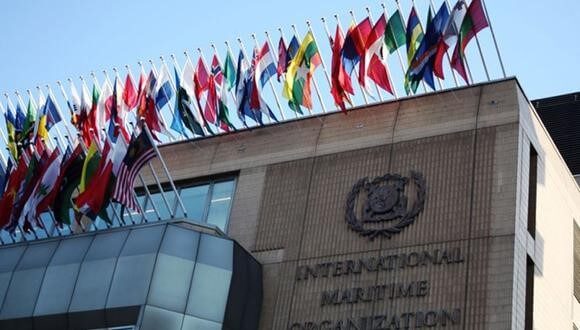
The global maritime industry faces renewed uncertainty this week following the International Maritime Organization’s (IMO) decision to delay adoption of the Net Zero Framework (NZF) — a cornerstone policy intended to drive decarbonization across international shipping.
At an extraordinary session of the Marine Environment Protection Committee (MEPC), IMO member states voted 57–49 in favor of a one-year adjournment, with 21 abstentions. The delay followed strong opposition from the United States and Saudi Arabia, both of which raised concerns about the proposed global carbon pricing mechanism and its potential trade implications. The U.S. reportedly exerted diplomatic pressure on smaller nations, threatening tariffs and port restrictions to dissuade support for the NZF.
Originally set to take effect in March 2027, the framework will now undergo further review — a move many in the shipping community see as a setback to industry certainty and investment planning.
IMO Secretary-General Arsenio Dominguez emphasized that the NZF remains “very much alive,” noting that intercessional working groups will continue refining the framework in the months ahead. However, the delay underscores how geopolitical pressures are increasingly influencing maritime climate policy.
The industry’s response has been mixed:
- The International Chamber of Shipping (ICS) expressed disappointment, warning that uncertainty will stall much-needed investment in cleaner technologies.
- Intertanko, representing independent tanker owners, viewed the delay as a chance to refine the regulatory framework and address industry concerns.
- The International Association of Ports and Harbours (IAPH) called the decision a “major setback,” arguing it will accelerate the rise of fragmented national and regional measures.
- The Global Maritime Forum warned the delay will make meeting the IMO’s decarbonization targets “even more challenging.”
The vote comes just days after the release of the 2025 “Progress Towards Shipping’s 2030 Breakthrough” report, which found that the sector is already off track to meet the IMO’s goal of having 5–10% of global marine fuel come from scalable zero-emission fuels (SZEF) by 2030.
While technology development remains strong — with methanol and ammonia engines nearing full commercial viability — demand, financing, and policy alignment remain critical weak points. The report notes that only about one-third of the SZEF demand needed by 2030 is likely to materialize at current ordering levels, risking stranded assets and delayed infrastructure readiness.
For bunker suppliers and shipowners alike, the combination of policy delays and tepid investment momentum introduces new complexity into the fuel transition outlook. Stakeholders are now watching closely to see whether national or regional frameworks — such as the EU ETS or potential U.S. carbon measures — begin to fill the void left by the IMO’s pause.
With the IMO’s next session scheduled for 2026, and the NZF adoption now delayed until at least late 2026 or early 2027, the decarbonization trajectory for global shipping remains uncertain — even as the clock toward 2030 continues to tick.